Face cleanser is usually the first product we reach for in the morning and the last one we use at night, yet it is often the step we think about the least. Through the day, your skin collects dirt, sweat, excess oil, pollution and traces of sunscreen or makeup. When these build up, the face can feel heavy, look dull and become uncomfortable.
Not every skin behaves in the same way. Oily skin may feel greasy by afternoon, while dry skin can feel tight and rough soon after washing. Because of these differences, a single product does not suit everyone equally well.
The same basic logic works for both men and women. Instead of choosing a product because of its packaging or a gender label, look at your own skin type, your daily habits and how your face feels after washing.
What Is a Face Cleanser and Why Is It Important?
A face cleanser is a product made to lift away the dirt, oil, sweat and everyday impurities that settle on your skin. Unlike an ordinary bar of soap, which can feel harsh on facial skin, it is designed for the delicate skin of the face. It usually comes as a gel, cream, foam or lotion that you massage on gently and rinse off.
Cleansing matters because everything you apply afterwards depends on a clean base. moisturiser and sunscreen sit better when they are not mixed with a layer of dust and oil. The American Academy of Dermatology also recommends washing the face with a gentle cleanser and lukewarm water and avoiding harsh scrubbing.
A Gentle Face Cleanser is especially useful in India, where heat, humidity and dust make our skin work harder every day. A cleanser that leaves the face squeaky or tight is usually doing more than is needed.
How to Choose a Face Cleanser for Different Skin Types
Choosing the best face cleanser does not mean buying the most expensive or popular product. It means finding one that matches your skin type and fits easily into your face-cleansing routine.
Face Cleanser for Oily Skin
Oily skin often looks shiny, especially on the forehead, nose and chin. It may feel greasy a few hours after washing, which tempts many people to cleanse again and again. This can backfire, because over-washing may leave the skin irritated.
A face cleanser for oily skin should help remove excess surface oil without stripping the skin completely. Look for a light, gentle formula that rinses off easily. Even oily skin needs moisture, so a lightweight moisturiser should still follow cleansing.
Face Cleanser for Dry Skin
Dry skin can feel tight, rough or flaky, particularly after washing or in air-conditioned rooms and winter weather. A strong or foaming cleanser that removes too much can make this feeling worse.
A face cleanser for dry skin should be gentle and should not leave the face feeling stripped. Cleansers that include moisturising ingredients such as glycerine can be a comfortable choice, and lukewarm water helps the skin stay soft.
Face Cleanser for Combination Skin
Combination skin has both oily and dry areas, most commonly an oilier T-zone with drier cheeks. What works for the forehead may feel too strong on the cheeks, so a balanced, gentle cleanser is often the most practical option.
If your cheeks feel rough after washing, your cleanser may be too strong. A face cleanser for all skin Types can be a simple starting point, as long as it feels comfortable on your face.
Face Cleanser for Normal and Sensitive Skin
Normal skin is generally balanced and tolerates most gentle products well. The main goal is to keep a steady habit and avoid harsh products. A mild daily face cleanser used once or twice a day is usually enough.
Sensitive skin needs a little more care. Read the ingredient list, avoid products that sting or leave the face red, and always patch-test a new cleanser. Apply a small amount on the inner forearm or behind the ear, and wait a day to see how your skin responds.
Face Cleanser for Men and Women: Is There a Difference?
In most cases, men and women can use the same cleanser, provided it suits their skin type. Skin does not really come with a gender label. What changes from person to person is oil levels, sensitivity and lifestyle.
Some habits can influence cleansing needs. Men who shave regularly may find their skin more sensitive afterwards, so a gentle formula helps. Women who wear makeup may need an extra cleansing step in the evening, and anyone who wears sunscreen should wash it off fully at night.
So when you look for a face cleanser for men or a face cleanser for women, treat the label as marketing and focus on the formula instead. Skin type and comfort matter far more than the colour of the bottle.
5 Benefits of Using a Suitable Face Cleanser
A well-chosen cleanser is a small step with several everyday advantages.
Helps Remove Dirt and Daily Impurities
Dust, sweat and pollution settle on the skin throughout the day. Plain water alone may not remove oil-based impurities properly. A cleanser helps lift these away so your skin feels clean and fresh.
Helps Manage Excess Oil
For oily skin, a suitable cleanser can remove surface oil without making the face feel dry or tight. A cleanser that is too strong may feel satisfying at first, but it can leave the skin uncomfortable later in the day.
Supports a Fresh and Healthy-Looking Complexion
When dirt and oil are cleared away regularly, the skin looks cleaner and more refreshed. This does not mean a cleanser can dramatically change your skin tone. It simply helps your face look clear and well cared for.
Prepares the Skin for Other Skincare Products
Once your face is clean, moisturiser feels better on the skin, and sunscreen can be applied more evenly in the morning. In this way, the cleanser supports every other product you use.
Supports a Consistent Daily Skincare Routine
Skincare works best when it is simple and regular. A gentle cleanser is quick to use and easy to remember, which makes it a good anchor for your morning and night habits.
How to Use a Face Cleanser Correctly
Start by wetting your face with lukewarm water, because very hot water can make the skin dry and irritated. Take a small amount of cleanser on your palms and spread it between your hands first.
Massage it gently onto your face in soft, circular motions for around thirty seconds to a minute. Do not scrub hard, especially if your skin is dry or sensitive. Rinse thoroughly and pat your face dry with a clean towel instead of rubbing.
Most people do well with cleansing twice a day, once in the morning and once at night, plus an extra wash after heavy sweating. Follow with a moisturiser every time, and apply sunscreen during the day, even on cloudy days.
Why Choose Vyasa Saffron Glow Face Cleanser?
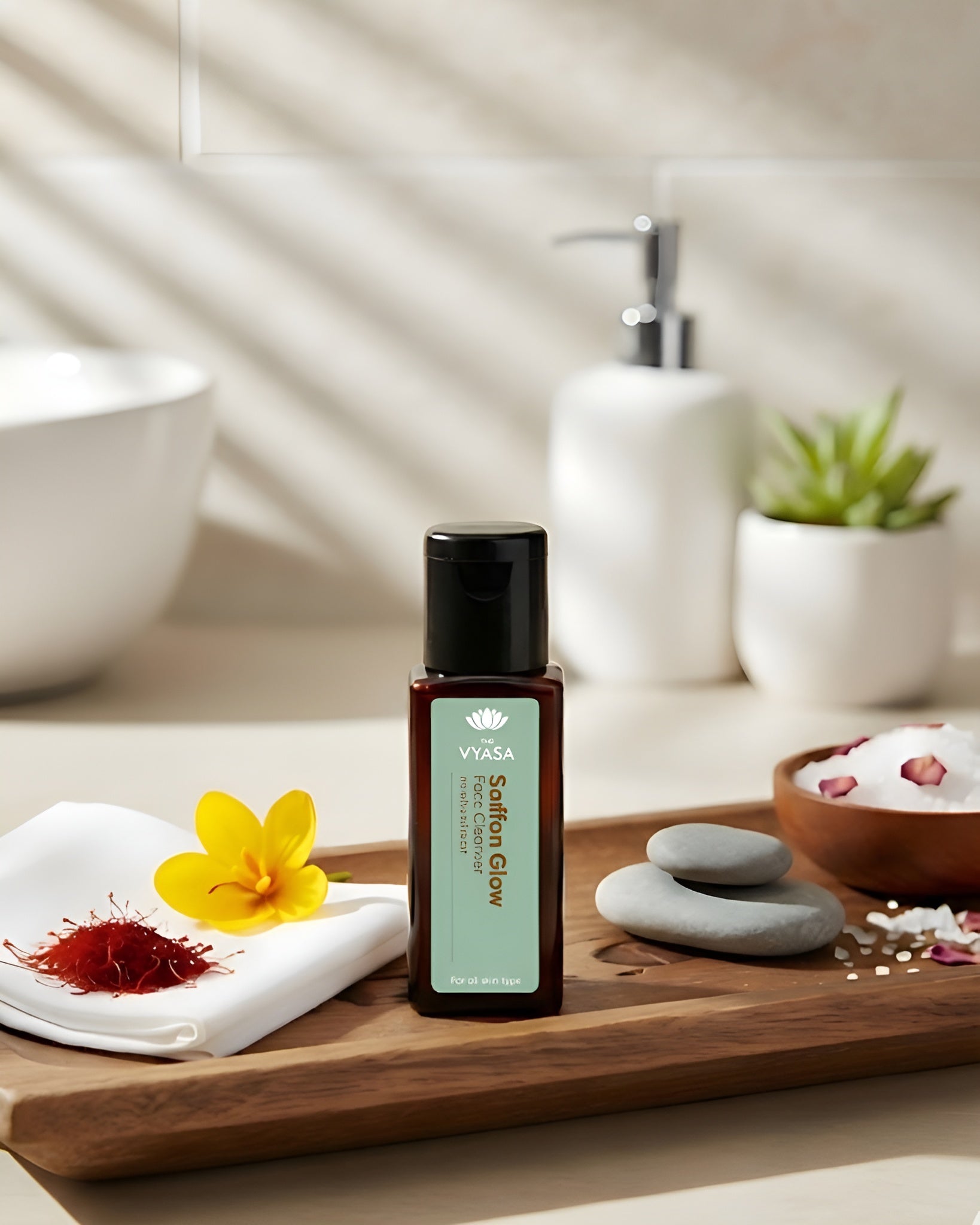
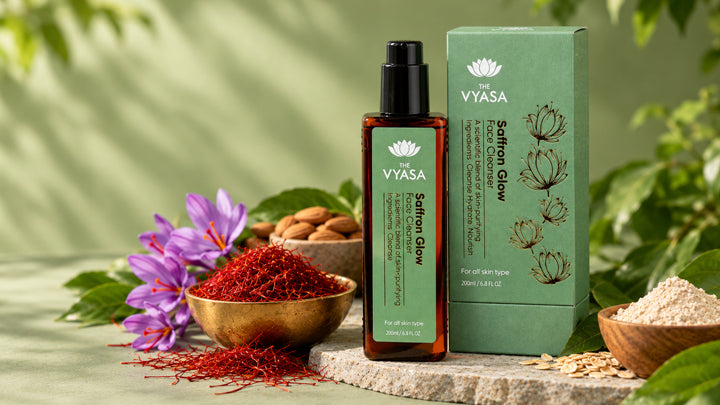
If you are looking for a Saffron Face Cleanser with an Ayurvedic approach, Glow Face Cleanser is one option worth reading about. According to the official product page, it is a purifying cleanser that blends Ayurvedic and skin-brightening elements and is meant to gently lift impurities. The page lists it as suitable for all skin types and mentions a 200 ml pack.
The highlighted ingredients are saffron, neem extracts, kewada and glycerine. The page describes saffron as helping brighten dull skin and as a natural astringent, neem extracts as cooling and purifying, and kewada as soothing and helpful for sensitive skin. Glycerine is a well-known humectant, which means it helps skin hold on to moisture.
The directions suggest taking a pea-sized amount on your palms, working it up and massaging it gently over your wet face and neck before rinsing. This makes it easy to use in a morning or evening routine, followed by your usual moisturiser and sunscreen.
No cleanser can promise to cure acne, pigmentation or any other skin condition. Cleansing only supports healthy-looking skin as part of a wider routine. The brand also advises rinsing immediately with cold water if the product gets into the eyes and stopping use if irritation continues.
Understanding the Ingredients in a Face Cleanser
Reading the ingredient list is an important step when choosing a face cleanser. Different ingredients serve different purposes, and understanding their roles can help you make a more informed skincare decision.
Glycerine: Glycerine is a humectant that helps attract and retain moisture in the skin. Its presence in a cleanser may help support a more comfortable cleansing experience.
Saffron: Saffron is used in various traditional skincare preparations. However, the benefits of a particular saffron-containing cleanser depend on its complete formulation, ingredient concentration, and available evidence.
Neem extract: Neem is used in traditional skincare products. Its presence alone does not establish that a finished cleanser will treat acne or other skin conditions.
Kewada: Kewada is used in some personal-care formulations. Its suitability depends on the specific formulation and individual skin sensitivity.
When evaluating a cleanser, remember that an ingredient's properties do not automatically establish the effectiveness of every product containing it. Always review the complete ingredient list and follow the manufacturer's directions.
Common Face Cleansing Mistakes to Avoid
One common mistake is washing the face too often. Cleansing several times a day, especially with a strong product, can remove too much natural oil and leave the skin tight or red. Twice a day is enough for most people.
Another mistake is using very hot water. It may feel soothing, but it can strip moisture and make dryness and sensitivity worse. Harsh scrubbing is also best avoided, because rough rubbing does not clean better; it only irritates.
Many people also pick an unsuitable cleanser because a friend or an advertisement recommended it. A product that works on someone else's oily skin may feel too strong for your dry skin. Finally, skipping moisturiser after cleansing is a common habit, but even oily skin needs some hydration to stay comfortable.
Conclusion
Choosing the right face cleanser is one of the simplest ways to look after your skin every day. Oily skin needs a gentle cleanser that controls surface oil, dry skin needs comfort and moisture, combination skin needs balance, and normal skin needs consistency. Sensitive skin needs careful ingredient checks and a patch test.
Most importantly, men and women should choose products based on their skin's needs and not on gender-based marketing. If you would like to try a Daily Face Cleanser with saffron, neem extracts, kewada and glycerine, you can explore Face Cleanser on the official product page and see whether it fits your routine.
FAQs
Which Face Cleanser Is Best for Oily Skin?
A gentle cleanser that removes excess oil without over-drying the skin is usually the best choice. Very strong cleansers may leave the skin tight and uncomfortable. Choose a light formula that rinses off cleanly and follow it with a lightweight moisturiser.
Which Face Cleanser Is Best for Dry Skin?
Dry skin generally benefits from a gentle cleanser that does not leave the face feeling tight or stripped. Look for a mild formula with moisturising ingredients such as glycerine, and apply moisturiser soon after cleansing.
Can Men and Women Use the Same Face Cleanser?
Yes, men and women can use the same cleanser when it suits their individual skin needs. Skin type, sensitivity and lifestyle matter much more than gender.
Can I Use a Face Cleanser Every Day?
Daily cleansing is generally appropriate when the product suits your skin and is used according to its instructions. Most people wash once in the morning and once at night. If your skin starts to feel dry, red or irritated, reduce the frequency and consider a gentler option.
Is Saffron Face Cleanser Suitable for All Skin Types?
The official product page lists Vyasa's saffron cleanser as suitable for all skin types. However, individual reactions can vary from person to person. If you have sensitive skin, review the ingredient list carefully and do a patch test first.