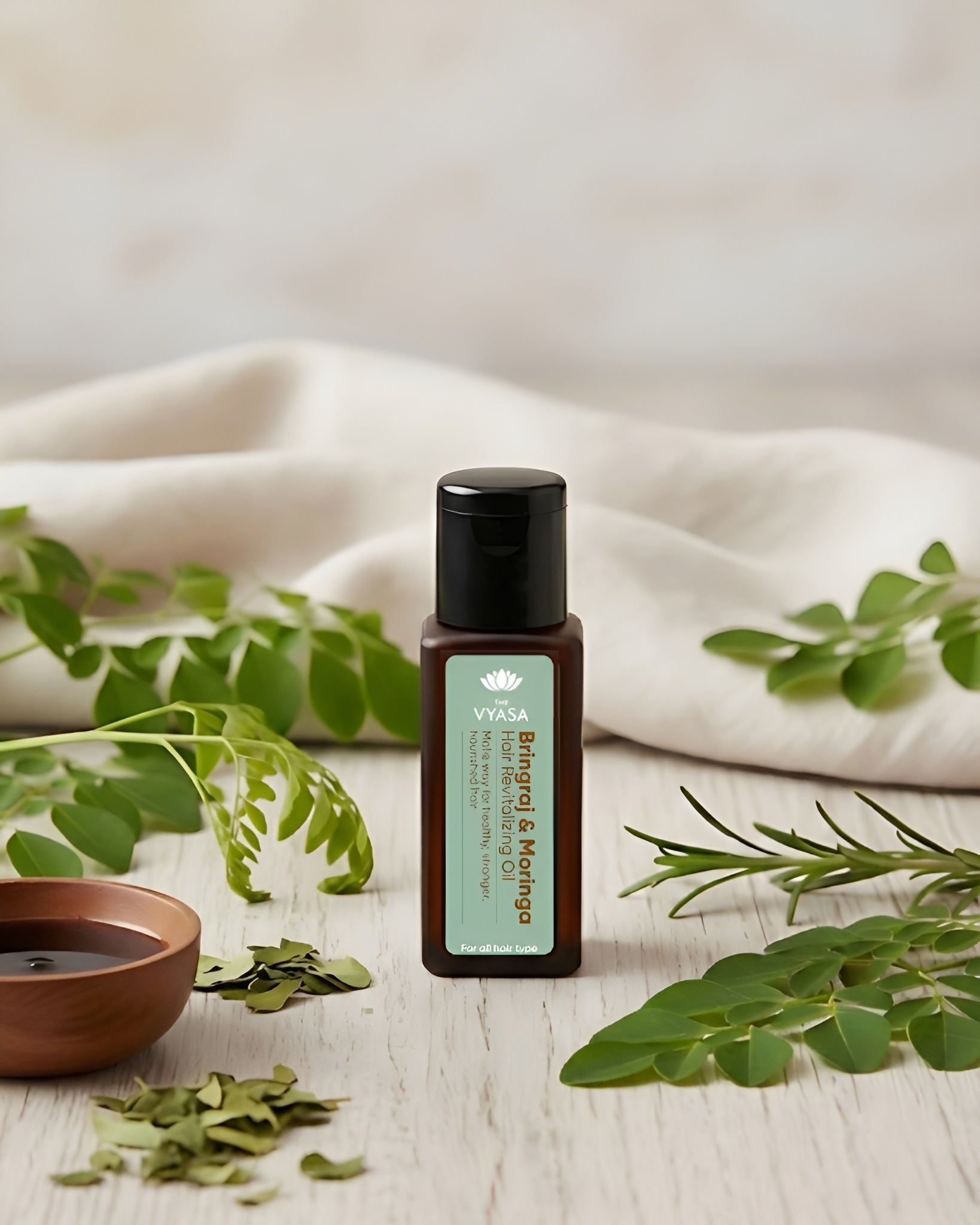
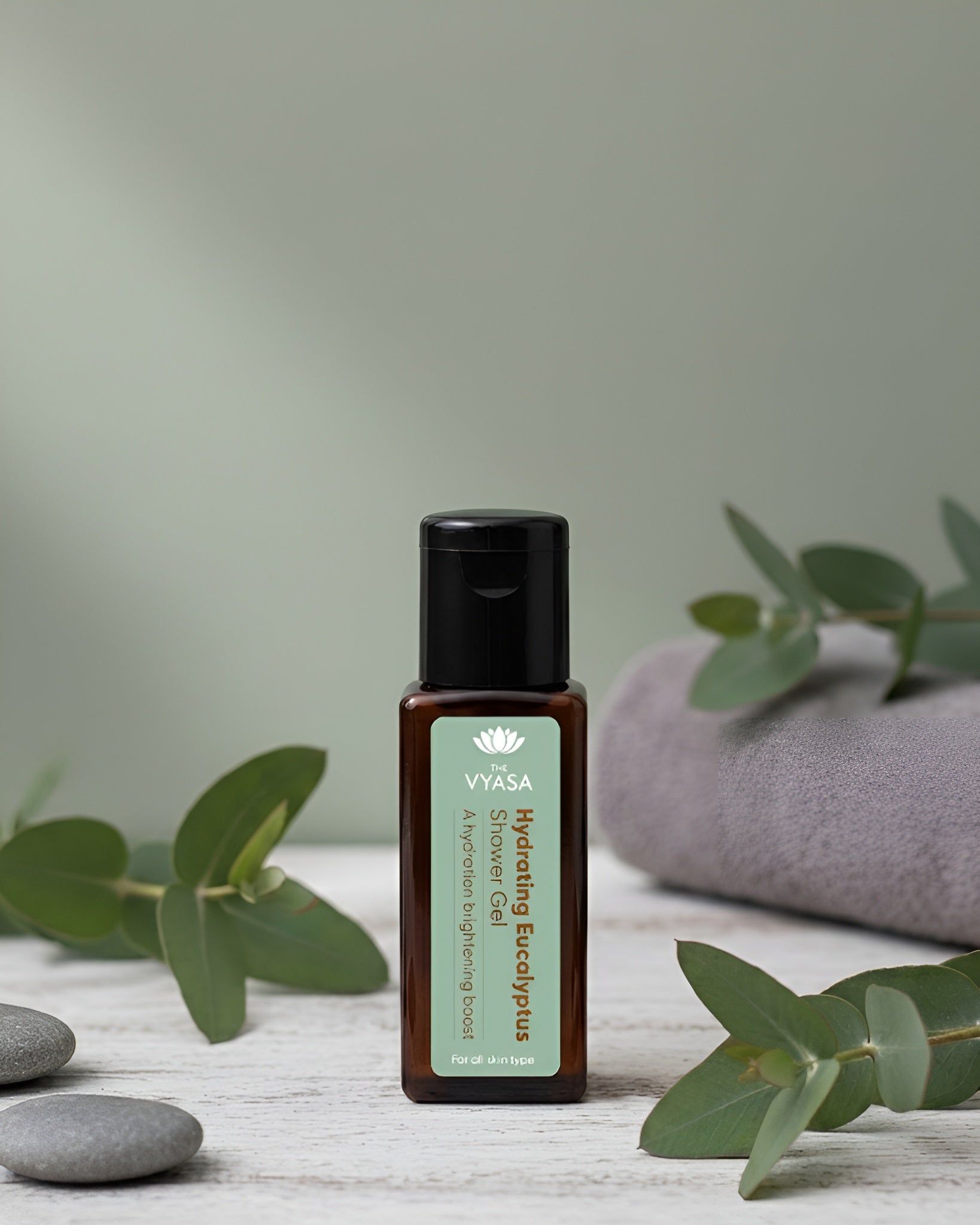
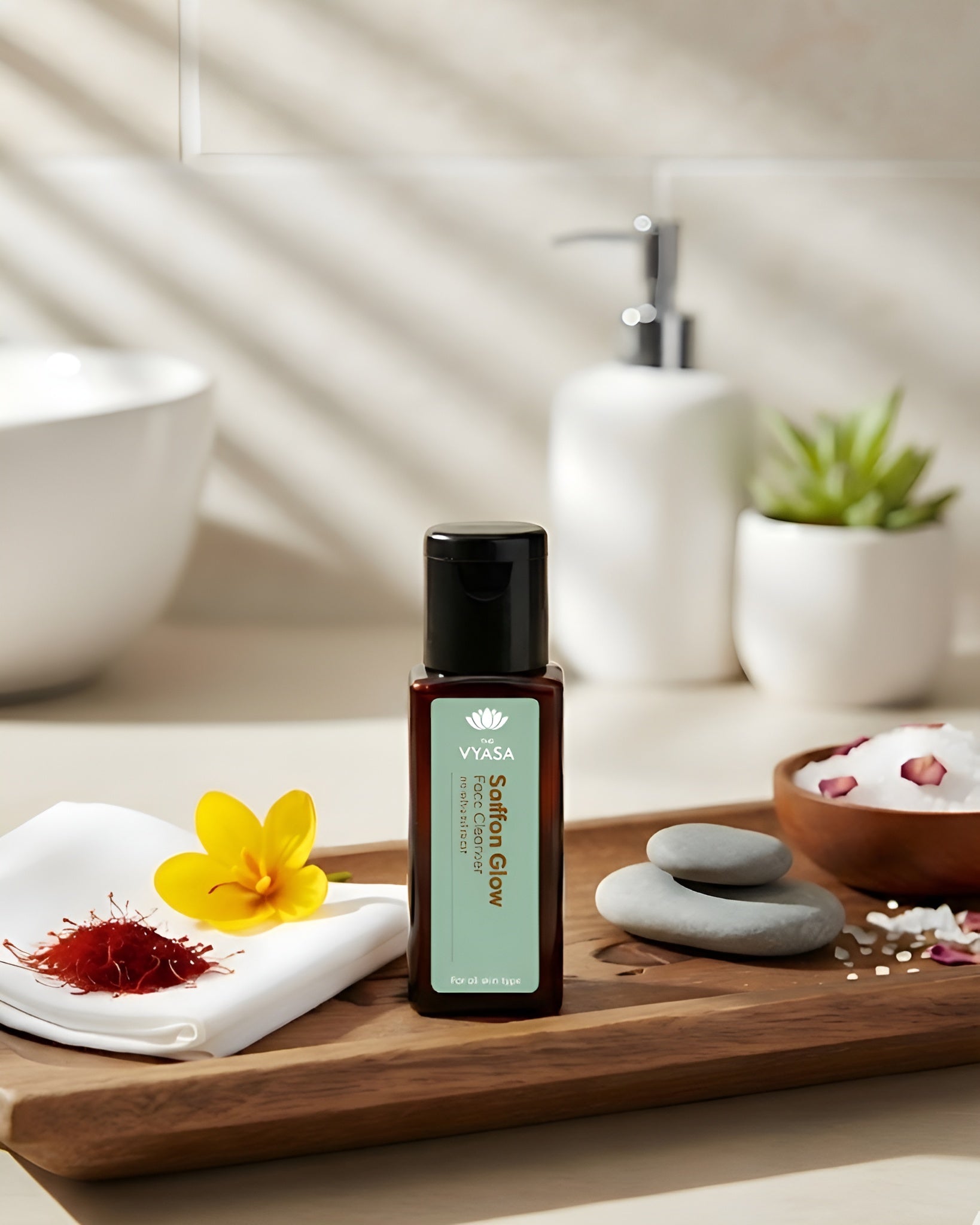
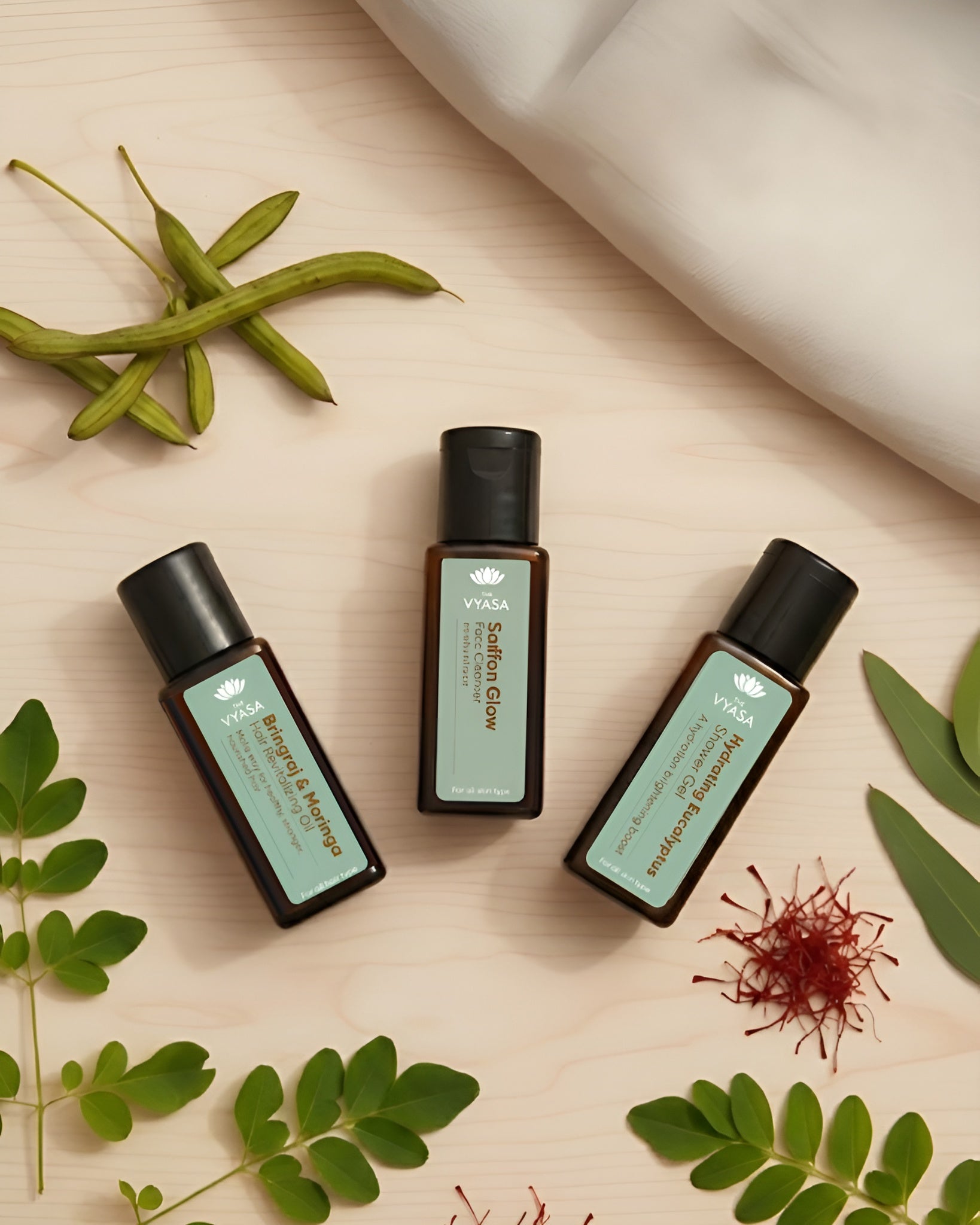
Face oil is one of the oldest beauty habits in India, and kumkumadi oil is one of its most loved forms. Many of us remember elders massaging the face with herbal oils before bed. Today, the same idea comes in a small bottle for busy people.
In this blog, you will learn what kumkumadi oil is, what goes into it, how to use it, and who should be careful with it. We will use The Vyasa Kumkumadi Face Glow Oil as an example, and we will also talk about limits so you can decide with a clear mind.
What Is Kumkumadi Oil?
Kumkumadi oil, also called Kumkumadi Tailam, is a traditional Ayurvedic skin oil. The name comes from kumkuma, the Sanskrit word for saffron. Classical Ayurvedic texts describe it for skin care, mainly for dull and uneven-looking skin.
The old method is to cook many herbs slowly in a base oil. Today, every brand makes its own version. So two bottles marked kumkumadi can differ in herbs, base oil, texture, and price. This is why reading the label matters.
Why Use a Face Oil at All?
Many people believe oil is bad for the face. That is not fully true. Our skin already makes a natural oil called sebum, which helps hold water inside the skin.
A good face oil adds a thin layer on top that slows down water loss. This is why oils feel comforting on dry skin, especially in winter or in air-conditioned rooms. But oil does not suit everyone in the same way, and we will come to that soon.
Face Oil vs Moisturiser
A moisturiser usually has water, oil, and other helpers mixed together. A face oil is mostly oil. So a moisturiser adds water, while a face oil mainly softens and seals.
Some people use a light moisturiser first and then a few drops of oil on top. But a treatment oil like kumkumadi is different. The brand's instructions say to use nothing else after it, so it works as the last step of the night.
What Is Inside The Vyasa Kumkumadi Face Glow Oil?
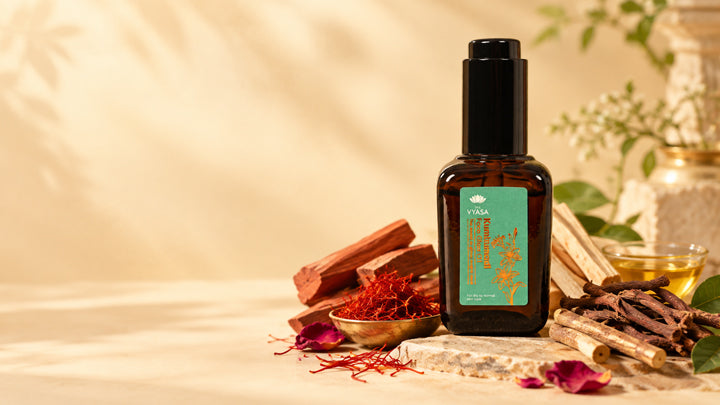
According to the product page, The Vyasa Kumkumadi Face Glow Oil is an Ayurvedic blend of saffron, sandalwood, manjistha, olive oil, and 20 other plant ingredients. It comes in a 30 ml bottle. Let us look at the main ones in simple words.
Saffron and Sandalwood
Saffron is the heart of any kumkumadi oil. It is costly because the threads are hand-picked from crocus flowers, and each flower gives only a few. Saffron is widely used in Indian beauty traditions for a fresh, bright look.
This oil also uses red sandal and white sandalwood, called sweta chandana. The brand says these help brighten and soothe the skin. Sandalwood has been used on Indian skin for a long time because it feels cool and calming.
Manjistha and Yashtimadhu
Manjistha is an Indian herb long used in Ayurveda for skin care. Yashtimadhu is licorice root. Some lab studies on licorice, especially a compound called glabridin, suggest it may help lighten dark patches.
These studies are limited, and they do not prove that every oil with licorice will work the same way. Still, it explains why these herbs are found in many kumkumadi recipes.
Olive Oil and Rose Water
Olive oil is the carrier here. A carrier oil holds the herbs and helps spread them on the skin. Olive oil is rich and softening, which is why this product is meant for dry skin. The page also lists rose water, which is often used for its calming feel.
How Does Kumkumadi Face Oil Work?
No face oil works like magic overnight. Here is a fair way to see it. First, the oil softens the skin and reduces dryness, and you may feel this in a few days.
Second, the massage helps the oil spread evenly and feels relaxing. Third, herbs like saffron, manjistha, and licorice may support a more even-looking tone with regular use. This third change is slow, because skin renews itself over several weeks.
The brand says many users see more glow in 2 to 3 weeks, and deeper marks may take 6 to 8 weeks. Treat these as general timelines, not promises, because every skin is different.
Benefits You Can Reasonably Expect
With regular night use, the most common change is softer, more comfortable skin. Some people also notice a fresher, more rested look in the morning. Over time, the tone may look a little more even.
Customer reviews on the product page say the oil absorbs well, does not feel sticky, and needs only a few drops. These are personal opinions, not clinical tests, but they give a useful idea of how it feels.
Dark spots need extra patience. Most come from sun, old pimples, or skin injury. A face oil can support your routine, but it cannot fix sun damage alone.
If you skip sunscreen in the day, new spots can form as fast as old ones fade. For deep or sudden pigmentation, please see a dermatologist.
Who Should Use It and Who Should Be Careful
Best for Dry to Normal Skin
The product page says this oil is meant for dry to normal skin. If your face feels tight after washing or you have dry patches, an oil like this may feel good.
Oily and Combination Skin
The page also says it is not suited for oily and combination skin and advises a patch test if you still want to try it. If your skin is oily or acne-prone, talk to a dermatologist first.
A rich oil on oily skin can feel greasy and may make pimples worse in some people.
Sensitive Skin
Natural does not always mean safe for everyone. Saffron, sandalwood, and other herbs can cause allergies in some people. If you have sensitive skin, eczema, or a known plant allergy, be extra careful.
How to Use Kumkumadi Oil at Night
Kumkumadi oil is a night treatment. Here is a simple way to use it, based on the directions on the product page.
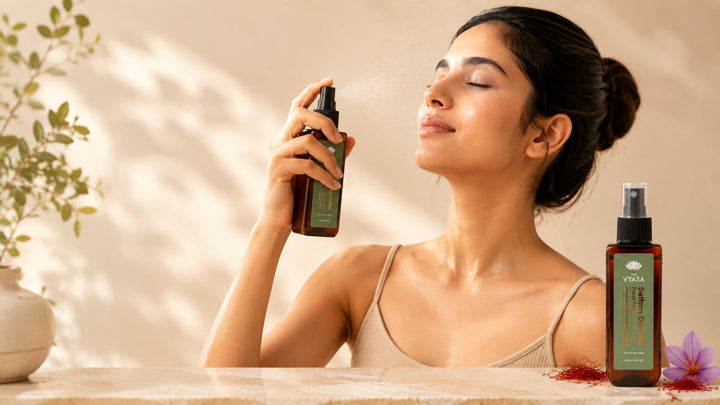
First, wash your face with a gentle cleanser. The brand suggests its Saffron Glow Face Cleanser, but any mild cleanser that does not dry your skin is fine. Pat your face dry.
Take 2 to 3 drops on your fingertips and warm them a little. Dot the oil on your forehead, cheeks, nose, and chin. Then massage with firm, circular, upward strokes for two to three minutes. Keep away from the eyes.
Skip any moisturiser or other treatment after this, and leave the oil on overnight. In the morning, wash your face and apply sunscreen.
Do a Patch Test First
Put one drop on your inner arm or behind your ear. Wait for 24 hours. If you see redness, itching, or small bumps, do not use the oil on your face. This takes a minute and can save you from a bad reaction.
Common Mistakes to Avoid
The first mistake is using too much oil. Two to three drops are enough, and more will only make your pillow oily. The second is expecting results in three days and quitting too early.
The third is skipping sunscreen in the morning. The fourth is trying many new products at once, because you will not know which one caused a reaction.
If you already use strong actives like retinol or acids, ask a dermatologist how to combine them. Also change your pillow cover often, because oil can hold dirt.
How to Choose a Good Kumkumadi Oil
Start with the ingredient list. Real saffron should be named, and the herbs should be listed clearly. Check that the oil suits your skin type. Try a small bottle first, since oils can go stale.
Be careful with very cheap kumkumadi oils, because real saffron is costly, and strong artificial fragrance can irritate the skin. For example, the Kumkumadi Face Glow Oil from The Vyasa is priced at Rs. 2,250 for 30 ml at the time of writing.
Also read customer reviews and check storage and expiry details on the label. If a brand promises to remove all marks in a week, walk away.
Final Thoughts
Kumkumadi face oil brings an old Ayurvedic habit into a modern night routine. It works best for dry to normal skin when used in small amounts, with patience and daily sunscreen. Do a patch test, read the label, and stay away from big promises.
If you want to try one, the Kumkumadi Face Glow Oil from The Vyasa is worth a look, starting with the 30 ml bottle. Use 2 to 3 drops at night, give it a few weeks, and let your skin tell you how it feels.
FAQs
What is kumkumadi face oil used for?
Kumkumadi face oil is used as a night treatment for dull, tired, and uneven-looking skin. Many people also use it to soften dry skin. It is based on an old Ayurvedic recipe with saffron and other herbs.
Can I use kumkumadi oil every night?
Most people with dry to normal skin can use it nightly if the patch test goes well. If you feel burning, itching, or breakouts, stop and speak to a dermatologist. If you are unsure, start with every second night.
Is kumkumadi oil good for oily skin?
Usually not. A rich oil can feel heavy on oily and combination skin and may clog pores. The product page advises caution for these skin types. If you still want to try, do a patch test and use only a few drops.
How long does kumkumadi oil take to show results?
Softer skin may show in a few days. The brand says many users notice more glow in 2 to 3 weeks, and deeper marks may take 6 to 8 weeks. Results differ from person to person, and daily sunscreen helps a lot.
Can kumkumadi oil remove dark spots completely?
No oil can promise complete removal. Kumkumadi oil may help the skin look more even over time, especially with daily sunscreen. Deep or sudden dark patches may need medical care, so see a dermatologist for those.
Can I use kumkumadi oil during the day?
It is best used at night. Oil can feel heavy under makeup and sunscreen. The brand says if you use it in the day, let it absorb fully and then apply a light SPF or primer.
Should I apply moisturiser after kumkumadi oil?
Not as per the brand's directions. Treat the oil as the last step of your night routine. If your skin feels very dry, ask a skin doctor before adding other products on top.
Is kumkumadi oil safe during pregnancy?
The ingredients are natural, but natural does not always mean safe in pregnancy. Please ask your doctor before using any new skincare product while pregnant or breastfeeding.
How many drops of kumkumadi oil should I use?
Two to three drops are enough for the whole face. Warm them between your fingers and massage gently. Using more will not give faster results and may leave your pillow oily.
How should I store kumkumadi oil?
Keep it in a cool, dry place away from direct sunlight. Close the cap tightly after each use and keep the bottle mouth clean. Check the label for shelf life. If the smell turns sour or strange, stop using it.